

Why Swing Weight Consistency Matters in Modern Pickleball Paddles
As the performance standards of pickleball paddles continue to rise, players and brands are becoming increasingly sensitive to one critical specification:
Swing weight consistency
Many paddle brands discover an uncomfortable reality after receiving OEM production orders:
- Two paddles from the same batch feel different
- One paddle swings faster
- Another feels head-heavy
- Some paddles generate different timing and power responses
In extreme cases, paddles from the same production run may show:
- 10g+ total weight differences
- Significant swing-weight variance
- Different balance points
- Uneven maneuverability
This issue is especially problematic for:
- Competitive players
- Professional paddle brands
- Tournament-level products
- High-volume OEM orders
At POM, as a professional pickleball paddle factory and trusted pickleball equipment manufacturer, minimizing paddle variance is one of our core engineering priorities.
The reality is:
Perfect zero-variance manufacturing does not exist in composite sports equipment.
However, advanced factories can dramatically reduce variance through:
- Material control
- Precision process engineering
- Weight calibration systems
- Strict QC protocols
- Structural balancing technologies
In this article, we explain:
- Why swing weight variance happens in pickleball paddles
- The major manufacturing factors behind inconsistency
- How premium manufacturers reduce batch variation
- What brands and players should expect realistically
- How to choose the right paddle manufacturing partner
1. What Is Swing Weight in Pickleball Paddles?
Many players confuse:
- Static weight
with - Swing weight
They are not the same.
1.1 Static Weight
Static weight refers to:
The total measured weight of the paddle.
Example:
- 7.9 oz
- 8.1 oz
- 230g
This is the simplest specification.
1.2 Swing Weight
Swing weight measures:
How heavy the paddle feels during motion.
It depends on:
- Weight distribution
- Balance point
- Head mass concentration
- Handle weighting
Two pickleball paddles may have:
- Similar total weight
but - Completely different swing feel
This is why swing weight consistency matters far more than raw weight alone.
2. Why Swing Weight Variance Happens in Pickleball Paddles
Modern pickleball paddles are highly complex composite structures.
A single paddle may include:
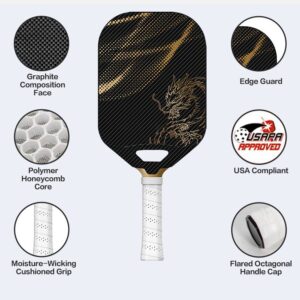
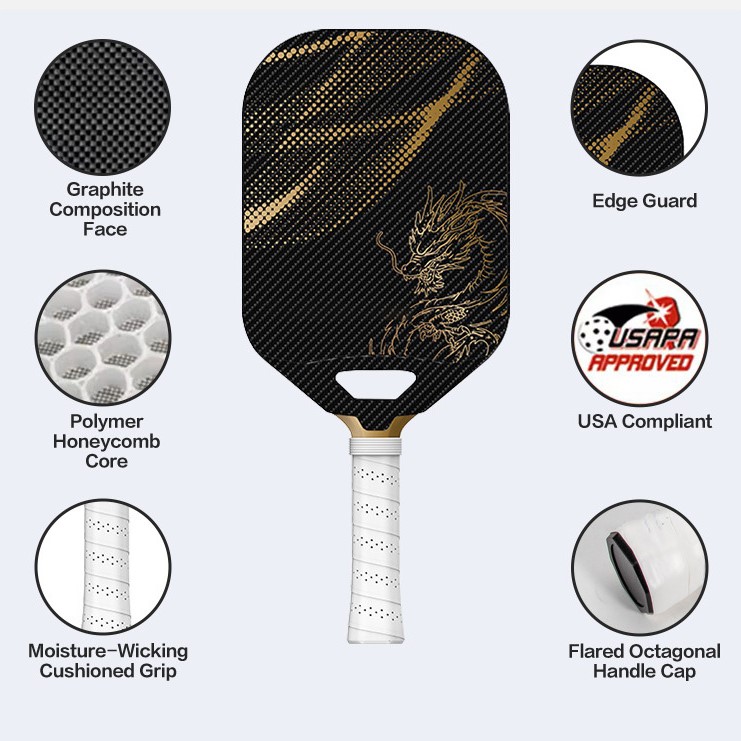
- Carbon fiber layers
- Honeycomb polymer core
- Foam-injected edges
- Resin systems
- Adhesives
- Grip tape
- Edge guards
- UV printing layers
Every material introduces potential variation.
Even tiny inconsistencies accumulate across production.
3. Carbon Fiber Variability in Pickleball Paddles
Carbon fiber is one of the biggest sources of variance.
Different carbon sheets may vary slightly in:
- Resin absorption
- Fiber density
- Moisture content
- Compression behavior
Even high-grade T700 carbon fiber can show small mass fluctuations.
3.1 Resin Saturation Variance
During lamination:
- Resin content may distribute unevenly
- Some paddle faces absorb more resin
- Others compress more tightly during thermoforming
This changes:
- Paddle stiffness
- Total weight
- Swing balance
At POM, resin-control systems are carefully calibrated to reduce variability.

4. Honeycomb Core Tolerance in Pickleball Paddles
Polymer honeycomb cores are never perfectly identical.
Manufacturing tolerances affect:
- Cell wall thickness
- Core density
- Compression uniformity
Even slight differences influence:
- Paddle flex behavior
- Weight distribution
- Vibration response
Premium pickleball paddles require high-precision core selection and inspection.
5. Foam Injection Variance and Swing Weight Imbalance
Modern thermoformed pickleball paddles frequently use foam-injected perimeter structures.
While foam improves:
- Stability
- Sweet spot size
- Vibration control
It also introduces one of the largest risks for swing-weight inconsistency.
5.1 Uneven Foam Expansion
Foam behaves dynamically during curing.
Factors affecting foam density include:
- Temperature
- Pressure
- Expansion timing
- Injection speed
If one paddle edge contains slightly more foam:
- Head heaviness increases
- Swing speed changes
- Paddle rotation behavior shifts
POM uses:
- Controlled injection pressure
- Expansion monitoring
- Density calibration systems
to minimize foam imbalance.
6. Adhesive and Edge Guard Variance in Pickleball Paddles
Many OEM factories underestimate the weight influence of:
- Adhesives
- Edge guards
- Bonding systems
However, glue inconsistency can significantly affect balance.
6.1 Glue Application Thickness
Excess adhesive causes:
- Weight increase
- Perimeter imbalance
- Uneven vibration dispersion
Especially around:
- Edge guards
- Handle junctions
- Foam cavities
POM uses precision adhesive application systems to maintain:
- Uniform bonding thickness
- Consistent perimeter balance
6.2 Edge Guard Weight Differences
Edge guards themselves may vary in:
- Density
- Thickness
- Material composition
Low-quality edge guards often produce:
- Paddle asymmetry
- Swing inconsistency
- Rotational instability
7. Thermoforming Process Variance in Pickleball Paddles
Thermoforming changed the modern pickleball paddles industry, but it also increased manufacturing sensitivity.
Key variables include:
- Heat distribution
- Compression pressure
- Cooling speed
- Material relaxation behavior
Even small pressure changes during molding affect:
- Paddle thickness
- Resin distribution
- Structural density
This directly impacts swing weight.
8. Handle Construction and Grip Weight Differences
Handle systems are another overlooked factor.
Grip systems include:
- Foam underlayers
- Grip tape
- Adhesive backing
- Butt-cap structures
Variations in grip wrapping tension or overlap may create:
- Handle imbalance
- Weight inconsistency
- Swing feel differences
At POM, handle assembly undergoes:
- Weight calibration
- Symmetry inspection
- Grip compression control
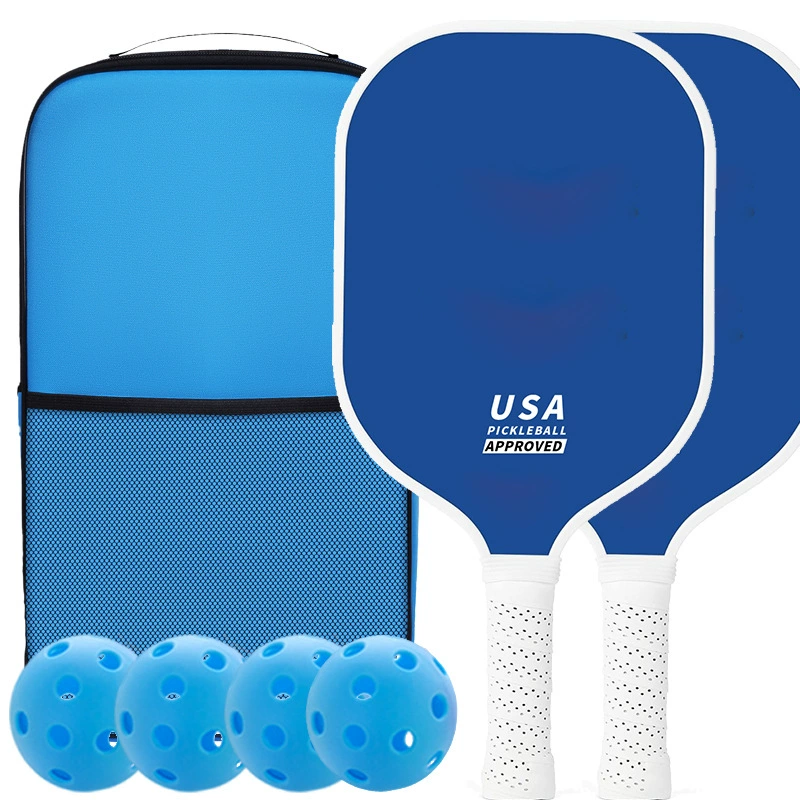
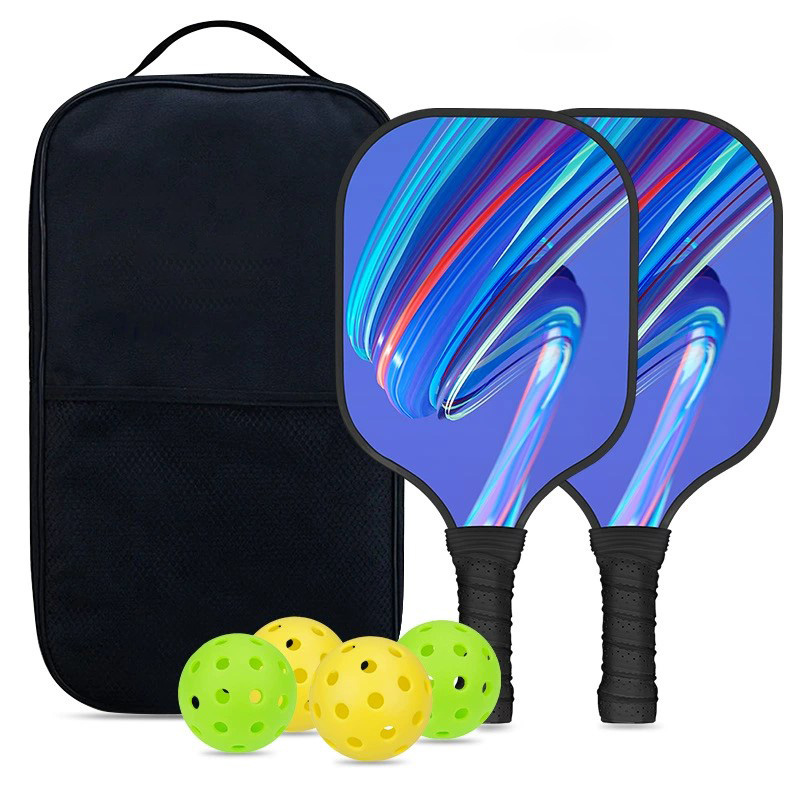
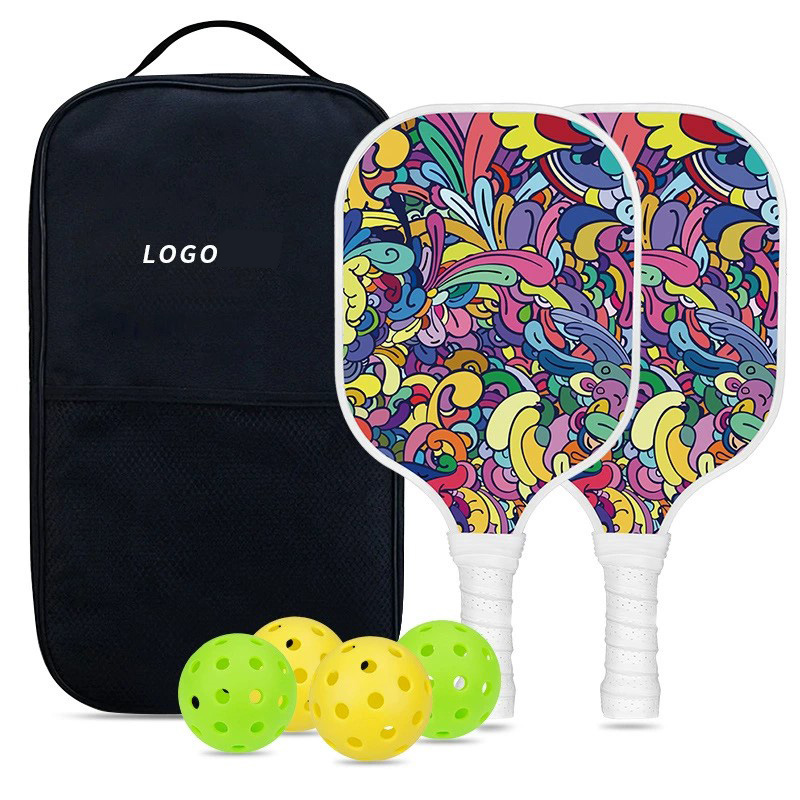
9. Printing Layers and Surface Coating Variance
Modern pickleball paddles often use:
- UV printing
- Silk-screen graphics
- Protective coatings
These layers add measurable mass.
If coating thickness varies:
- Paddle balance shifts
- Surface feel changes
- Swing weight becomes inconsistent
This is why premium manufacturers tightly control:
- Ink application thickness
- Coating density
- Curing uniformity
10. Environmental Factors During Manufacturing
Composite manufacturing is highly sensitive to environmental conditions.
Variables include:
- Humidity
- Ambient temperature
- Material storage conditions
Moisture absorption alone may slightly affect:
- Resin systems
- Core materials
- Adhesive curing behavior
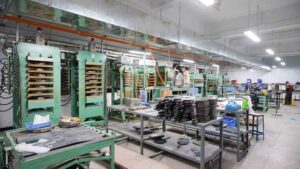
Professional pickleball paddle factories maintain controlled production environments to reduce these risks.
11. Why 100% Zero Variance Is Impossible in Pickleball Paddles
Consumers sometimes expect:
Every paddle in a 500-unit batch should feel perfectly identical.
In reality, composite sporting goods always involve:
- Material tolerances
- Chemical variability
- Structural micro-differences
Even elite tennis racquets and golf clubs show measurable variation.
The true goal is:
Minimizing variance within acceptable performance tolerances.
At POM, we focus on reducing variance to levels that:
- Preserve gameplay consistency
- Meet professional standards
- Support premium brand positioning
12. How POM Reduces Swing Weight Variance in Pickleball Paddles
As a professional pickleball equipment manufacturer, POM uses multiple engineering systems to reduce variance.
12.1 Material Batch Control
We carefully monitor:
- Carbon fiber lots
- Resin systems
- Foam materials
- Core density batches
This improves production stability.
12.2 Precision Weight Calibration
Each paddle undergoes:
- Static weight measurement
- Swing-weight analysis
- Balance-point verification
Outlier products are removed before shipment.
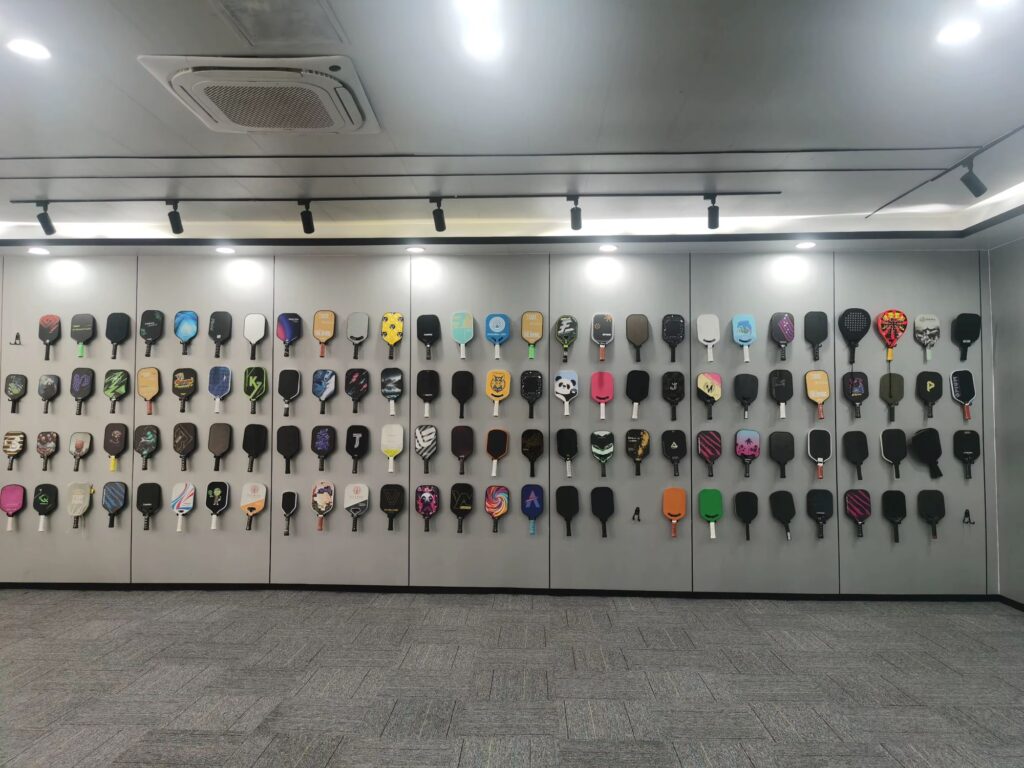
12.3 Multi-Stage QC Systems
POM applies quality checks during:
- Material preparation
- Lamination
- Thermoforming
- Foam injection
- Assembly
- Final inspection
This layered QC approach dramatically reduces production inconsistency.
13. How Brands Should Evaluate OEM Pickleball Paddle Factories
When selecting a pickleball paddle factory, brands should ask:
13.1 Does the Factory Control Swing Weight?
Many factories only measure total weight.
Professional manufacturers also monitor:
- Balance point
- Swing inertia
- Rotational stability
13.2 Does the Factory Have Material Traceability?
Material tracking helps identify:
- Batch inconsistencies
- Density variation
- Resin issues
13.3 Does the Factory Perform Individual QC Testing?
Premium OEM manufacturers should inspect:
- Weight distribution
- Structural consistency
- Edge symmetry
14. How Players Should Choose Pickleball Paddles with Better Consistency
Players seeking premium pickleball paddles should prioritize:
- Reputable manufacturers
- Tight QC standards
- Consistent production quality
Avoid products that:
- Feel dramatically different between units
- Have inconsistent balance
- Show unstable swing behavior
Consistency is a hallmark of professional manufacturing.
15. Precision Manufacturing Defines Premium Pickleball Paddles
Swing weight variance is one of the most complex challenges in modern pickleball paddles manufacturing.
Differences may originate from:
- Carbon fiber layers
- Foam injection
- Resin distribution
- Adhesive systems
- Thermoforming conditions
- Handle construction
While perfect zero variance is impossible, premium manufacturers can dramatically reduce inconsistency through:
- Precision engineering
- Material control
- Weight calibration
- Strict quality systems
At POM, we continuously optimize:
- Manufacturing precision
- Structural consistency
- Swing-weight calibration
- OEM production standards
As a trusted pickleball equipment manufacturer and experienced pickleball paddle factory, our goal is simple:
Deliver high-performance pickleball paddles with professional-level consistency that brands and players can trust.
Because in competitive pickleball, consistency is not just a specification.
It is part of performance itself.
We have a pickleball paddles factory of skilled engineers ready to support you in your product development journey from idea design to production.Any ideas about your product you can contact us freely,and our engineers will get back to you with a quote asap. Whatsapp +86 18902611680
Who is POM?
As a leading pickleball factory, POM is committed to providing high-quality sports equipment and accessories for pickleball enthusiasts. We believe that pickleball is not only a competitive sport, but also a lifestyle.
What is your product range?
We pecialize in the design and production of high quality pickleball equipments,such as pickleball paddles,pickleball balls,pickleball nets,pickleball accessories…
Are you a manufacturer or a trader?
Can you provide samples?
•Of course, usually we will provide samples for your testing. For custom printed samples, pls send your requirements to us for checking the sample cost.
• It takes about 7 days for sample production.
Can I have my custom logo , design or size?
Sure. We can do any packaging with your design. You can still have your own logo.